West End has a reputation for being the neighborhood where nothing much happens on purpose. Tree-lined streets, Victorian houses set back from the sidewalk, an unhurried pace that visitors mistake for sleepiness. That reputation misses what's actually built into these blocks. Between a schoolhouse the city almost lost to a developer, a lake donated outright rather than platted for sale, and a walking tour that runs on a fixed schedule all year, West End holds more standing cultural infrastructure per block than anywhere else in Aspen. Late September is when that infrastructure turns itself on all at once.
A Walking Tour That Never Takes a Season Off
Most neighborhoods don't get a standing history lesson. West End does, twice a week, rain or shine, whether or not anyone new is in town to take it. The Neighborhood History Tour meets outside The Resnick Center for Herbert Bayer Studies every Tuesday and Thursday at 10:30 a.m., and it walks the sidewalks and lawns that border the Aspen Meadows campus, the Aspen Institute, and the Wheeler/Stallard Museum grounds. The subject matter isn't a highlight reel. Guides cover Ute activity in the valley, a racetrack and rodeo that once operated on ground now occupied by some of the neighborhood's most photographed Victorian and midcentury modern homes, and the residents who watched the town grow up around their front porches.
The tour's existence says something the architecture alone doesn't. A neighborhood only keeps a twice-weekly history walk running for years if there's an actual audience that keeps showing up for it, locals as much as visitors. West End treats its own past as a living reference point, not a plaque you read once and forget.
The Schoolhouse Aspen Almost Sold
The Red Brick Center for the Arts on Hallam Street opened in 1942 as Aspen's combined elementary, middle, and high school. By 1991 the district had outgrown it and consolidated everything onto a new campus on Maroon Creek Road, leaving the old building on the market. It could have gone to a developer. Instead, the Aspen Snowmass Council for the Arts petitioned the city to buy it, and in August 1992 Aspen voters said yes by a slim margin. The city issued bonds, completed a bare-bones rehabilitation, and reopened the building in the fall of 1994 as a home for the arts.
More than three decades later, the Red Brick still runs on that original bet. It houses resident artists working in ceramics, jewelry, painting, and sculpture, along with a rotating slate of nonprofits and a public gallery program. The rent tenants pay retired the city's original construction bonds years ago. What could have been condos or a parking structure is instead the building where West End's cultural programming actually gets made, not just displayed.
The Lake That Was a Gift, Not a Development
A few blocks away, the same pattern repeats with water instead of brick. Hallam Lake, a 25-acre preserve at the end of Puppy Smith Street behind the Aspen post office, exists today because Elizabeth Paepcke donated the land in 1968 rather than selling it. It became the first location of the Aspen Center for Environmental Studies, and it still functions as ACES headquarters, free to enter, with an indoor trout stream, a rescued red-tailed hawk and golden eagle on site, and a rotating calendar of naturalist programs that runs deeper into the shoulder season than most people expect. On September 2, Aspen local Megan DiSabatino led a sound bath and forest bathing session at Hallam Lake, the kind of program that only exists because the land was never carved into lots in the first place.
Between the schoolhouse and the lake, West End has now preserved two entirely different categories of civic asset through two entirely different mechanisms, a public vote and a private gift, and both decisions are still paying dividends on a weekly basis decades later.
Eight Days, Five Addresses
That preservation instinct is also why the last week of September reads like the busiest stretch on West End's calendar rather than the quietest. From September 21 through 27, Aspen Restaurant Week Autumn runs across town, and the neighborhood's own entry is West End Social, the subterranean French Alpine Bistro on the Aspen Meadows Resort grounds at 845 Meadows Road. Aspen Meadows' own event calendar points guests to the restaurant's patio for its 270-degree Rocky Mountain views and live music from local artists, a reason to stay on the Meadows campus rather than drive into the core for dinner.
Overlapping those same days, September 25 through 27, the Aspen Literary Festival spreads its second annual run across the Wheeler Opera House, the Red Brick Center for the Arts, and the Pitkin County Library, three venues that together put author talks, panels, and book signings within an easy walk of West End's own streets. Then the calendar closes out on Saturday, October 3, with the Aspen Historical Society's Community Picnic at 620 West Bleeker, the same Wheeler/Stallard Museum grounds the walking tour passes twice a week. Eight days, five addresses, and every one of them sits on land or in a building that West End residents or the city chose to keep rather than sell.
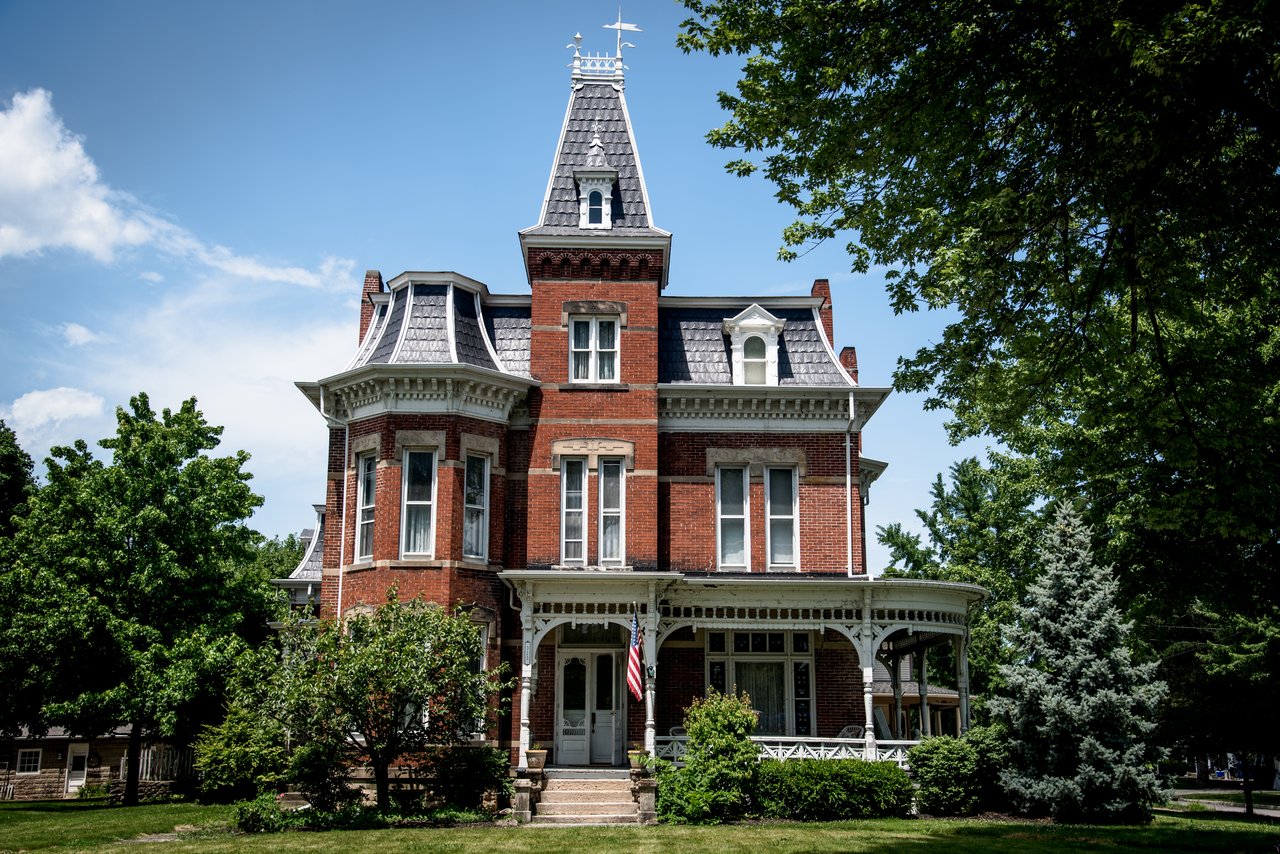
None of this is coincidence dressed up as pattern. The Red Brick survived because of a ballot measure. Hallam Lake survived because of a donation. Bleeker Street's Victorian row, including the 1885 brick house built for shoe and boot merchant Henry Webber and now anchoring Pioneer Park, survived because someone kept choosing renovation over replacement. The literary festival, the restaurant week stop, and the historical society picnic aren't new additions bolted onto an old neighborhood. They're what happens every year when a neighborhood that already protected its institutions gets to use them.
West End doesn't get louder in late September because the town imports more programming. It gets louder because the buildings and the land that make programming possible were never on the table to lose.
If you're curious what else West End's preserved corners have to offer beyond this stretch of the calendar, Soffia Wardy is always glad to talk through the neighborhood in more depth. Let's Connect.